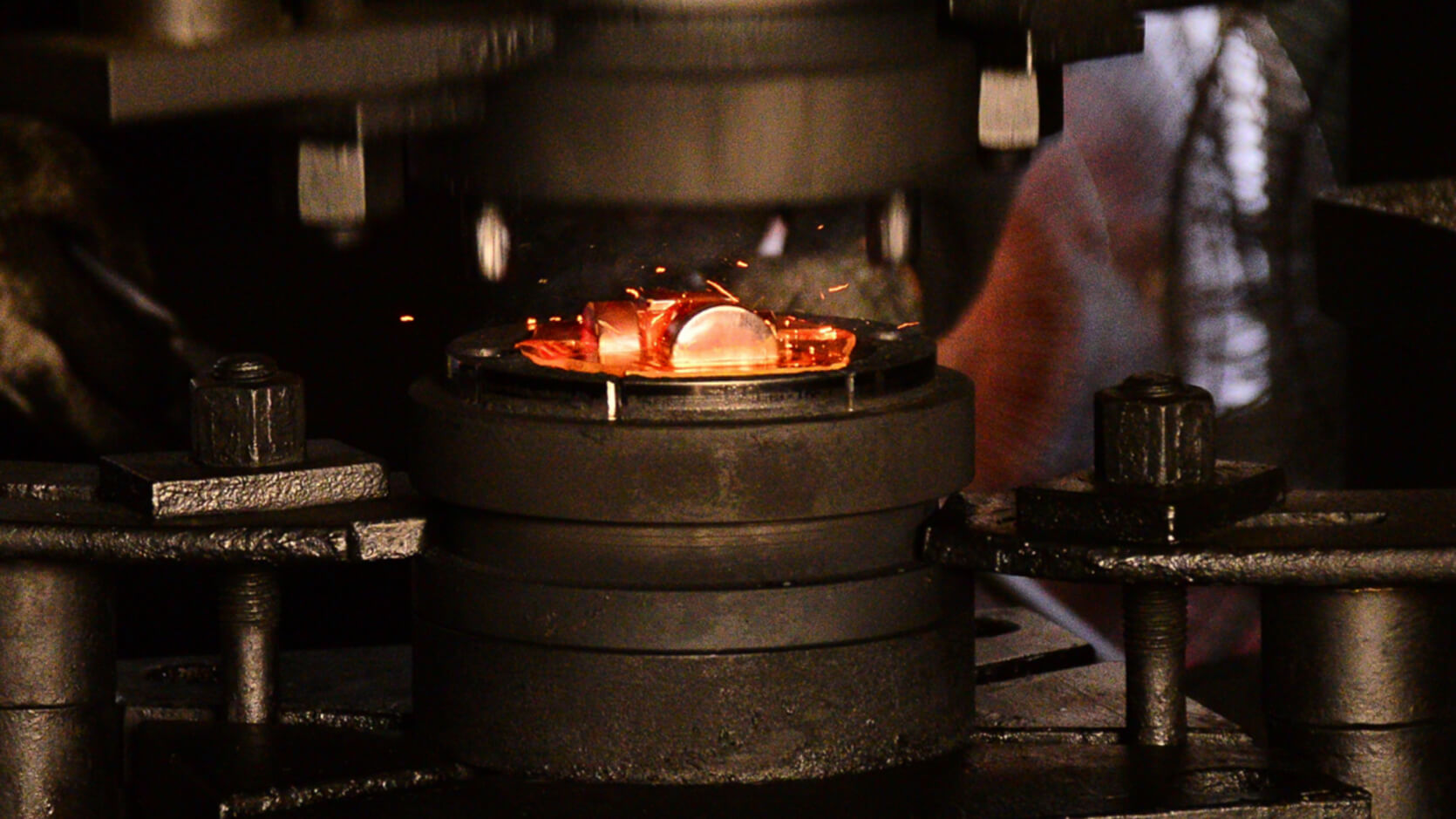
Forging & Die Casting
Forging: Typically involves applying high pressure to plastically deform the metal, changing its shape. It is suitable for components that must withstand high impact or heavy loads.
Die Casting: Usually involves injecting molten metal into a metal mold, where it cools and solidifies into shape. It is commonly used for high-volume production of precision components.
Features
• Forging
-High Strength: Grain structure is rearranged during forging, improving mechanical properties and fatigue resistance.
-No Porosity Defects: Compared to casting, forging produces denser parts with fewer shrinkage cavities or gas bubbles.
-Excellent Structural Integrity: Ideal for parts that must endure high impact or heavy loads.
• Die Casting
-High Precision and Smooth Surface: Produces dimensionally stable parts with near-mirror surface finish.
-Complex-Shaped Parts: Capable of producing thin-walled, ribbed, and geometrically complex components.
-Suitable for Mass Production: Short cycle times and low unit costs make it ideal for high-volume manufacturing.
Forging

Prepare the Forging Billet

Heat the Forging Billet

Forging

Cooling and Solidification

After-treatment

Inspection and Shipping
Die Casting

Prepare the Mold
Melting Metal

Apply Pressure to Inject into the Mold
Cooling and Solidification
After-treatment